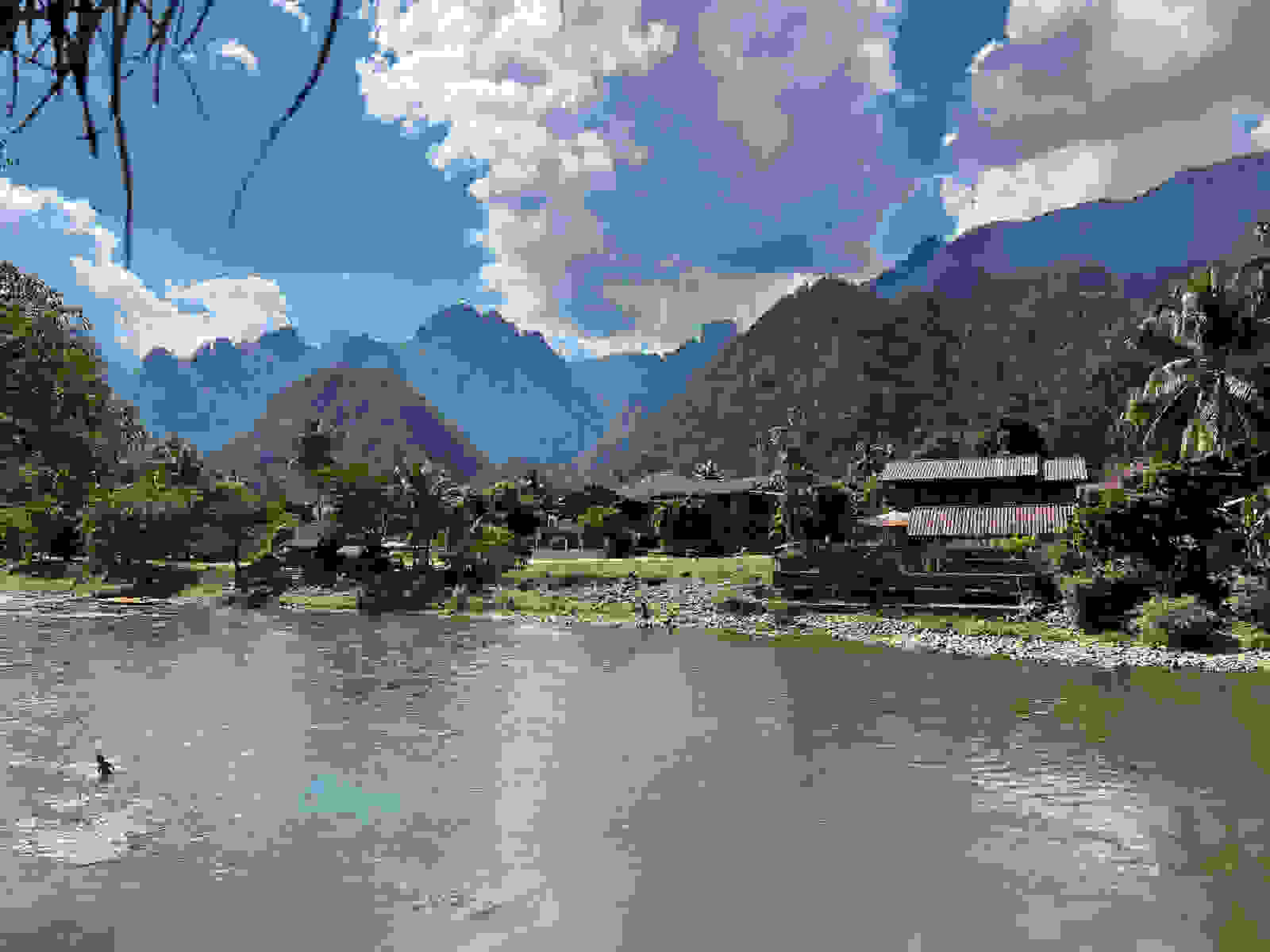
Still blue-green water beneath a forested limestone karst wall
The lagoons

Blue Lagoon 1, 2 or 3?

The short answer

Want the famous one with the cave and don't mind company — 1. Want quieter water under the karst — 2 (and it's the one you can buy a ticket for online, right now). Have a buggy and a sense of adventure — 3.

The three, honestly compared

Pay at the gate

Blue Lagoon 1

The one in every photo. Closest to town, next to Pou Kham cave, the full swings-and-rope scene. Crowds arrive by 11:00.

≈ ⭘10–15,000 cash at the gate
Buy online · live price

Blue Lagoon 2

Quieter water beneath the karst, space to actually swim. The only lagoon with an instant QR ticket — buy it here and skip the gate queue.

⭘35,000 per entry · live
Buggy country

Blue Lagoon 3

The far one. Roughest road, fewest people, ziplines nearby — most people arrive by buggy or ATV on a half-day run (tours from ~$20).

≈ ⭘20,000+ gate + buggy to get there
The bookable one

Blue Lagoon 2 — entry ticket

Pay by Lao QR or international card, and the ticket lands on your phone instantly — a QR you scan at the gate. No queue, no cash, no "do they take my card?" moment standing in the sun.

⭘35,000per person · live from the rail
Buy the ticket →How to pay as a foreigner? The full guide →

Why is the water so blue? The honest science

The mountain makes the water and the light paints it. The valley's limestone has been dissolving for millions of years under slightly acidic rain — carved into caves and underground rivers. The lagoons are where those springs finally surface, and the rock has already strained out the silt on the way. The neon blue is a light trick: the spring water arrives saturated with dissolved limestone, and those suspended micro-crystals scatter sunlight exactly the way the sky does — blue wavelengths bounce hardest, and the pool glows.

SeasonThe colorWhy
Dry season · Nov–AprNeon blue / aquamarinePeak clarity, low runoff, direct sun on the minerals.
Rainy season · May–OctEmerald → brownStorm runoff clouds the water — still swimmable, less photogenic.
Overcast daysDeep tealIndirect light and jungle reflections soften the glow.

A spa the mountain built

✓Muscles and jointsCalcium- and magnesium-rich spring water plus buoyancy — the same idea as cold-spring hydrotherapy after a long hike or kayak day.
✓The cold wake-upThe springs hold a steady 20–24°C all year. The chill-then-rewarm cycle stimulates circulation, eases inflammation and releases endorphins — you leave the water sharper than you entered.
✓SkinThe gentle alkaline mineral soak softens mild irritations. Rinse after — the hardness leaves a faint mineral stiffness as it dries.
!Rinse after swimmingFresh water restores skin and hair — the minerals stay otherwise.
!Goggles for sensitive eyesDissolved carbonates can sting if you keep your eyes open long underwater.
!Never drink itClean for swimming, untreated as drinking water — it's wild groundwater.
!Test the depth firstSubmerged limestone ledges and tree roots — always check before jumping, life jacket if unsure.

Getting there — and the scooter honesty

Tuk-tuk is the standard: agree the price before you get in, expect a flat round-trip rate if you want the driver to wait. Bicycles work for lagoon 1. Scooters are rented all over town — but the lagoon roads are potholed gravel, rental maintenance is a lottery, and scooter accidents are the #1 tourist injury in this valley. Many travelers are quietly advised to take the tuk-tuk instead. Your travel insurance may not cover you on two wheels at all — check before you ride.

Season note: in the rainy season (Jun–Oct) the water clouds and the roads get slick. Dry season is when the blue is actually blue.

Questions people also ask

Which Blue Lagoon is the best?
Blue Lagoon 1 is the most famous and closest to town (~15–20 min), beside Pou Kham cave — and the most crowded. Blue Lagoon 2 is quieter with clearer water under the karst. Blue Lagoon 3 is the far one: rough road, fewest people, ziplines nearby, usually reached by buggy or ATV tour.
How much does Blue Lagoon cost?
Entry at the lagoons runs about ⭘10,000–15,000 paid in cash at the gate (Blue Lagoon 1). Blue Lagoon 3's entry can be bought online in advance for ⭘40,000 all-in with an instant QR ticket — the only lagoon you can do that for.
How do I get to the Blue Lagoons?
Tuk-tuk (the standard), rented bicycle, scooter (road conditions are rough — see our honest note), or a buggy/ATV tour for lagoons 2 and 3. Expect 15–20 minutes to lagoon 1 and considerably more to 2 and 3.
When should I go?
Early morning beats both the crowds and the midday heat, and the water photographs best before dozens of swimmers arrive. In the rainy season the water clouds up — the dry season (Nov–Feb) is when the blue is actually blue.
Why is the Blue Lagoon water so blue?
Geology and light physics. The valley is limestone karst: rain, slightly acidified by carbon dioxide, has been dissolving the rock for millions of years, carving caves and underground rivers. The lagoons are where those springs surface — already filtered clean by the mountain itself. The water arrives saturated with dissolved limestone, and those suspended micro-crystals scatter sunlight the way the sky does: blue wavelengths bounce hardest, and the pool glows aquamarine. Dry season = neon blue; rainy season = emerald to brown as runoff clouds it.
Is swimming in the lagoons good for you?
Genuinely, yes — it's a natural cold-spring spa. The mineral-rich water (calcium and magnesium from the limestone) relaxes sore muscles after a hike or kayak, buoyancy takes the load off joints, and the steady 20–24°C immersion gives your circulation the cold-shock-then-rewarm kick that boosts blood flow, eases inflammation and lifts the mood. Rinse with fresh water after (the water is 'hard'), don't swallow it, and test depth before jumping — the limestone ledges are real.
Make a day of it

Lagoon, viewpoint, river sunset — one plan.

Our 2–3 day itinerary drops the lagoon into a full day you can build and book as you go.